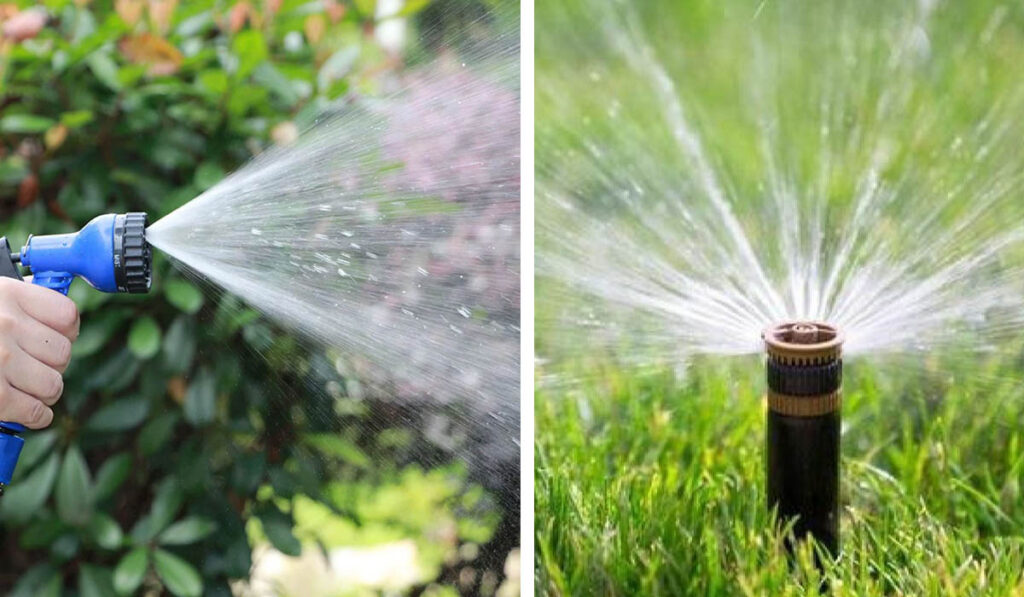
Irrigation systems come in two main types: automatic and manual. Let’s dive into the advantages and disadvantages of each:
Automatic Irrigation Systems:
Advantages:
Water efficiency: Sensors and timers optimize water usage. – Convenience: Set schedules and forget. – Increased property value: Smart systems can boost property appeal. – Remote control: Manage irrigation via smartphone apps.
Disadvantages:
Higher upfront cost: Equipment and installation expenses. – Complexity: More components can lead to technical issues. – Power dependency: Systems require electricity or batteries.
Manual Irrigation Systems:
Advantages:
Low cost: Simple setup and minimal equipment. – Easy to repair: Basic components are straightforward to fix. – No power needed: Operates without electricity.-
Disadvantages:
Time-consuming: Requires regular manual intervention. – Water waste: Overwatering can occur without monitoring. – Limited control: No automated scheduling or adjustments.
Choosing the Right System:
Consider factors like water source, garden size, budget, and personal preference. Automatic systems suit larger areas or busy lifestyles, while manual systems work well for small gardens or those who prefer hands-on control.